
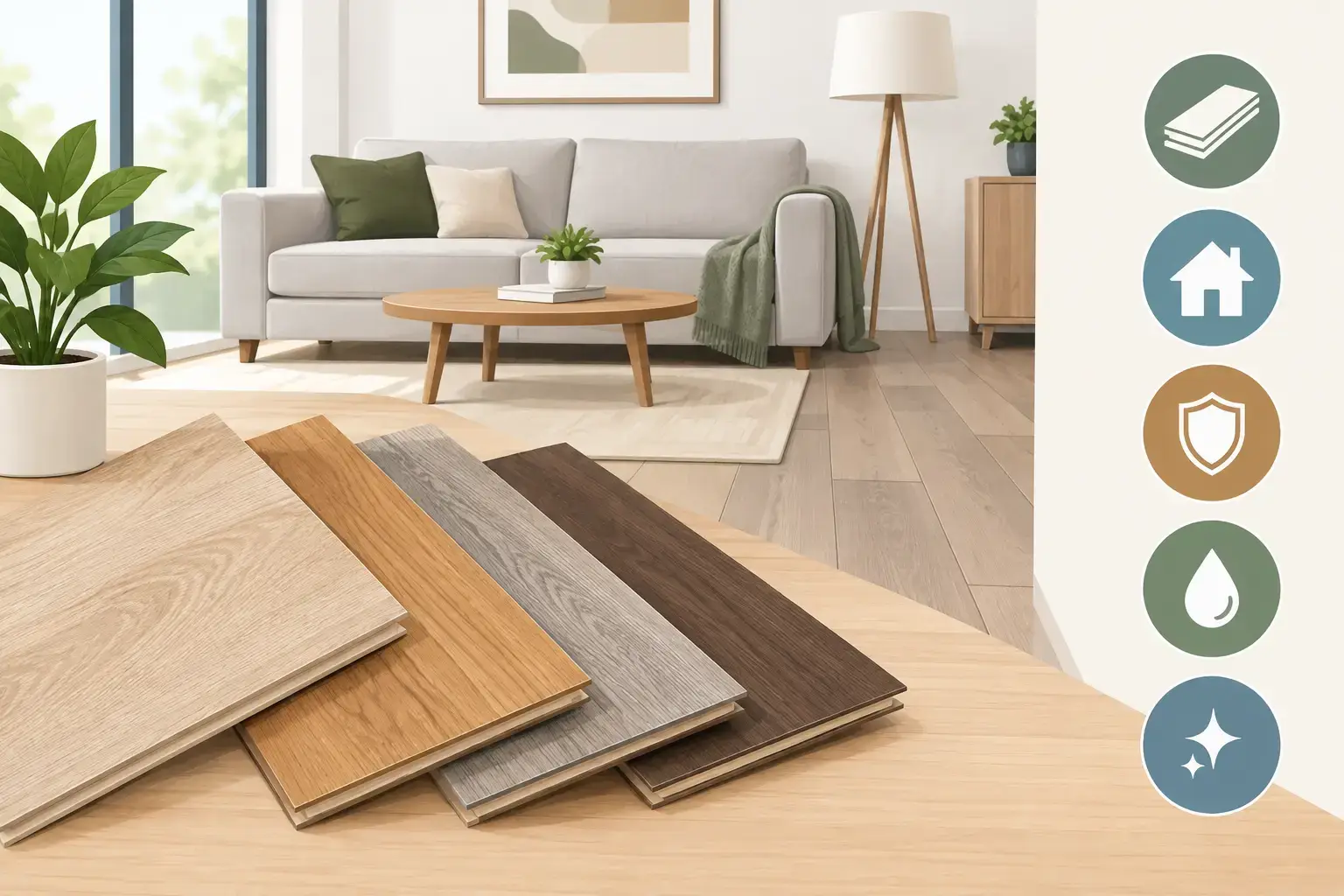
A floor can look great in a showroom and still be the wrong choice for your home. The sample may be under bright lights, away from wet boots, a busy kitchen, a dog’s nails, and the daily traffic that tells the real story. Knowing how to choose laminate flooring means looking beyond color and price to find a product that fits the room, the condition of your subfloor, and the way your household lives.
Laminate remains a practical option for Seattle-area homeowners who want the look of hardwood without hardwood’s price or maintenance demands. It can work especially well in living rooms, bedrooms, hallways, and many main-floor spaces. The right product, properly installed, creates a clean, durable finish that makes the entire home feel more updated.
Start With the Room, Not the Sample
Before comparing plank colors, decide what the floor needs to handle. A quiet guest bedroom has different demands than an entryway where rain jackets, shoes, and backpacks collect. A kitchen may need more water protection, while a sunlit family room needs a finish that still looks good under changing natural light.
Laminate is constructed with a photographic decorative layer protected by a wear layer, over a dense core. That construction gives it a convincing wood appearance and good everyday durability, but it also creates limits. Traditional laminate is not the best choice for areas with standing water, recurring leaks, or a high chance of overflow, such as certain bathrooms, laundry rooms, and below-grade spaces with moisture concerns.
Water-resistant laminate can be a strong choice for kitchens, powder rooms, and entrances when the product is rated for those uses and installed according to the manufacturer’s instructions. Water-resistant does not mean waterproof. Spills still need to be cleaned up promptly, and moisture protection at edges, seams, and transitions matters.
If your project includes a bathroom with known water damage or a shower-floor leak, address the source of moisture before selecting any new flooring. A beautiful floor cannot solve a subfloor or plumbing problem underneath it.
Choose the Right Durability Rating
One of the clearest ways to compare laminate products is the Abrasion Class, or AC, rating. This rating helps indicate how well the flooring’s surface is designed to handle wear.
For most residential projects, AC3 laminate is a dependable baseline. It is generally suitable for normal household use in bedrooms, living rooms, dining rooms, and hallways. For active households, large dogs, children, or high-traffic entry areas, AC4 can offer extra peace of mind. AC5 is made for heavier commercial traffic and may be more than most homes need.
A higher rating is not automatically the best value. You may be paying for performance your room will never require, while overlooking features that matter more, such as water resistance, a realistic texture, or a stronger locking system. The goal is to match the product to the space rather than simply buy the highest number on the label.
Also ask about the warranty, but read it with practical expectations. Warranties often require proper installation, appropriate indoor conditions, and quick cleanup of spills. They are useful, but they should not replace a careful product selection and quality installation.
How to Choose Laminate Flooring by Thickness
Laminate thickness commonly ranges from about 7 mm to 12 mm, sometimes with an attached pad included. A thicker plank often feels more substantial underfoot and can help reduce the appearance of minor subfloor variations. It may also offer a deeper, more natural-looking edge profile.
That said, thickness alone does not determine quality. A well-made 8 mm product with a strong core and wear layer can outperform a poorly made 12 mm option. Consider thickness alongside the locking system, water protection, and the condition of your existing floor.
Floor height deserves attention during planning. New laminate and underlayment can change the height at doorways, appliances, stairs, and transitions to tile or carpet. This is especially relevant when replacing flooring in one room but leaving adjacent rooms untouched. Taking measurements before materials are ordered helps avoid awkward thresholds and doors that no longer clear the new floor.
Look Closely at Water Resistance and Core Construction
In the Pacific Northwest, water protection is not a minor detail. Damp shoes at the front door, a dropped glass near the kitchen, or moisture tracked in from a covered deck can all test a floor’s edges and seams.
Compare the manufacturer’s stated water-resistance window and the conditions behind it. Some products are designed to resist surface moisture for a set number of hours. Others use a more moisture-resistant core, sealed edges, or a locking system intended to limit water from reaching the seams. Those details matter more than a vague claim that a product is “waterproof” or “water resistant.”
For a room where moisture is a regular concern, ask whether laminate is truly the best material. Luxury vinyl plank or tile may be the more reliable long-term choice in some kitchens, bathrooms, mudrooms, and lower-level spaces. A trustworthy flooring recommendation should account for that trade-off instead of forcing one material into every room.
Select a Color That Works in Your Actual Light
Bring samples home before making a final decision. View them beside cabinets, painted walls, trim, furniture, and countertops. Check them in morning light, afternoon light, and with your normal interior lighting on. Seattle’s gray winter days and bright summer evenings can make the same color appear noticeably different.
Light oak and natural wood tones can make smaller rooms feel more open and tend to show less dust than very dark floors. Medium tones are flexible and often work well with existing finishes. Dark laminate can create a dramatic, refined look, but it may show pet hair, footprints, and surface dust more easily. Very light or gray-heavy floors can feel current, although a strongly trendy tone may be harder to match if you update cabinets or furniture later.
Texture is worth considering, too. Embossed finishes can add a more believable wood-grain feel and help disguise small marks. High-gloss floors can look striking at first, but they typically reveal scratches, smudges, and unevenness more readily than matte or low-sheen options.
Do Not Skip Subfloor Preparation
Even the best laminate can feel disappointing over an uneven or unstable subfloor. Floating floors need a clean, dry, level surface so the planks lock together correctly and remain supported. If the floor moves, dips, or has high spots, you may later notice squeaks, gaps, flexing, or damaged seams.
A professional assessment should identify issues such as old flooring that needs removal, localized leveling needs, moisture concerns, loose plywood, or damage around exterior doors and appliances. This is where a low material price can become misleading. Installation preparation is often the difference between a floor that looks good on day one and one that still performs well years later.
Underlayment also needs to match the product and the installation conditions. Some laminate includes an attached pad, while other products require a separate underlayment. The correct option can help with sound control, minor surface imperfections, and moisture protection where appropriate. Adding an extra pad when it is not approved by the manufacturer, however, can make the floor too soft and affect the locking joints.
Plan the Installation Details Early
Laminate is often installed as a floating floor, which means it needs room to expand and contract around the perimeter. Baseboards, quarter round, door jamb cuts, and transition pieces are not just finishing touches. They help the completed floor look intentional while allowing it to move as designed.
Think through the direction of the planks as well. Running flooring along the longest visual line of a room often creates a more open appearance, but layout should also account for hallways, connected spaces, window light, and transitions. In an open-concept area, a consistent layout can make the home feel more cohesive.
Order enough material for cuts, layout adjustments, and future repairs. The exact allowance depends on the room shape and plank pattern, but complex spaces require more than a simple rectangular bedroom. Keeping a few unopened cartons after the project is complete can be helpful if a plank is ever damaged.
Balance Material Cost With the Finished Result
Budgeting for laminate should include more than the per-square-foot price. Removal and disposal of old flooring, subfloor repairs, underlayment, trim work, transitions, furniture moving, and installation all affect the full project cost. A transparent estimate should explain what is included so there are fewer surprises once work begins.
For homeowners planning a larger update, flooring decisions should coordinate with painting, kitchen work, or bathroom remodeling. Installing floors at the right stage of the project protects the new surface and helps crews complete trim, cabinets, and transitions cleanly. Good scheduling is part of good workmanship.
A free, no-pressure in-home estimate gives you the opportunity to compare samples in your home, discuss the subfloor, and get clear answers before committing. Black Rock Remodeling helps homeowners across King and Snohomish counties make flooring decisions based on real conditions, practical needs, and the finish they want to live with every day.
The best laminate floor is not necessarily the thickest, darkest, or most expensive one. It is the one that fits your room, handles your household’s routine, and is installed with the preparation and attention to detail that a lasting floor requires.